
This page explains the UK ETS regulation and how operators can manage the exposure in IMOS. It covers the regulatory context and the commercial calculation available in the Carbon Calculator, including how UK ETS costs can be included in the Estimate and Voyage P&L, and related financial workflows.
Introduction
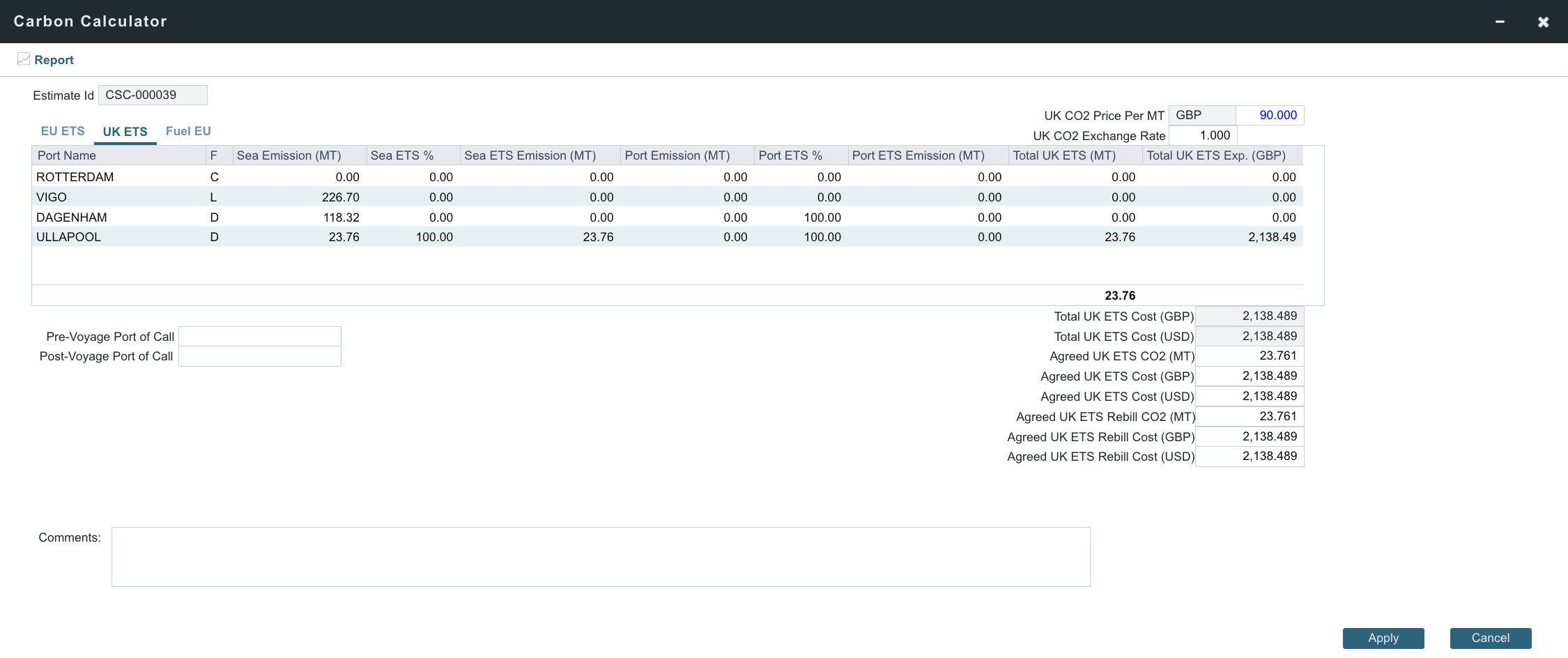
The UK Emissions Trading Scheme (UK ETS) expands to maritime starting 1 July 2026. This article summarizes the scheme's scope and compliance mechanics as they apply to shipping, alongside how UK ETS modifiers and carbon pricing are intended to be handled in the Carbon Calculator. Like EU ETS, UK ETS percentages apply to the Carbon Cost calculation per voyage leg, determined by the relevant ports.
This feature requires the configuration flag CFGEnableUkEts to be enabled.
UK ETS Scope
From 1 July 2026, the UK ETS applies to cargo and passenger vessels of 5,000 GT and above. Offshore ships are brought into scope later, from 1 January 2027. The scheme covers emissions on domestic voyages between UK ports and emissions generated while in UK ports of call.
Phase-in and Reporting Timeline
Unlike EU ETS, which phases in surrender obligations over several years, the UK ETS applies a 100% surrender obligation from the start, but the first scheme year is a half-year.
|
Period |
Notes |
|---|---|
|
1 Jul – 31 Dec 2026 |
First (partial) scheme year; reporting begins 1 July |
|
2027 onward |
Standard reporting year, 1 Jan – 31 Dec |
Greenhouse Gases Covered
The greenhouse gases covered align with EU ETS and include combustion and slippage emissions of:
-
Carbon dioxide (CO₂)
-
Methane (CH₄)
-
Nitrous oxide (N₂O)
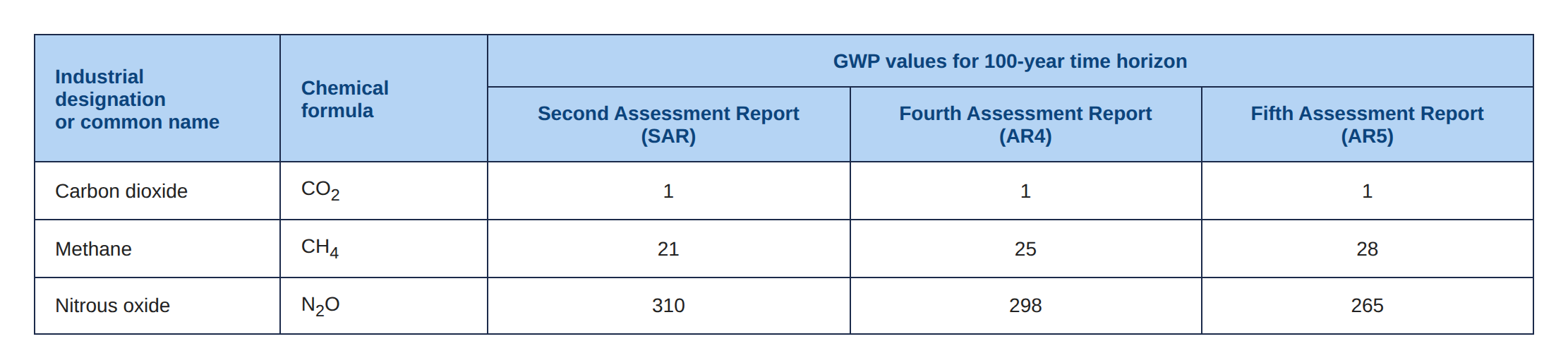
Emissions are calculated on a tank-to-wake basis. Methane and nitrous oxide are reported using IPCC AR5 global warming potential values: CH₄ = 28 and N₂O = 265. (Note: this is the same GWP convention used for EU ETS and differs FuelEU - AR4)
Domestic Voyages and Ports of Call
A domestic voyage includes any voyage from one UK port to another, as well as a voyage that starts and ends at the same UK port. This regulation covers 100% of domestic voyage emissions.
100% of Emissions generated during ports of call are also in scope, including time at berth, whether moored or anchored, at UK ports and offshore installations.
Because 100% of port-of-call emissions are captured, the port stay portion of an international route calling at a UK port is also within scope, even though the international voyage leg itself is not a domestic voyage.
Northern Ireland <–> Great Britain Deduction
A 50% deduction applies to the surrender obligation for voyages between Northern Ireland and Great Britain. Port stays in both Northern Ireland and Great Britain remain subject to a 100% surrender obligation.
For comparison, on a voyage between a non-UK port (e.g. France) and Great Britain, the voyage leg carries no (0%) surrender obligation, while the Great Britain port stay remains at 100%.
UK ETS in the Carbon Calculator
This feature requires the configuration flags CFGEnableUkEts and CFGDefaultIncludeUKETSExpInPnl to be enabled. Schema version 53.4 is also a requirement.
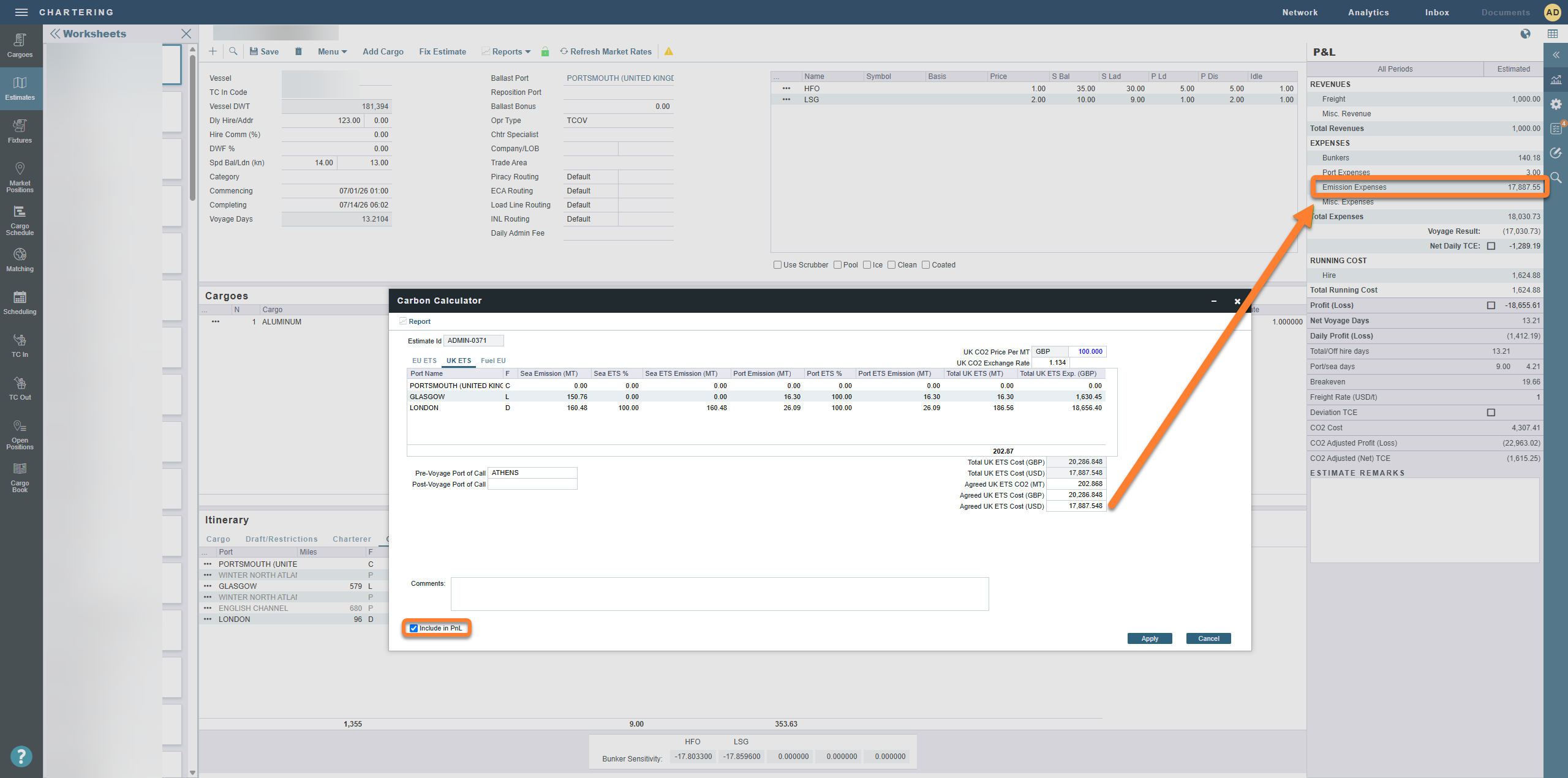
The UK ETS Calculator is available in the Carbon Calculator on the Estimate and Voyage level to aid in commercial decision-making regarding the impact of UK ETS, and to apply a price to carbon emissions. The percentage values for each leg of an itinerary will apply to the Carbon Cost calculation by default and will be determined by the Load and Discharge ports. You can also view the total UK ETS emissions in MT.
Select the Include in PnL checkbox and set a Settlement Type on the contract to add UK ETS costs to the Estimate PnL or Voyage PnL. These costs follow standard accounting workflows including accruals.
Contract Settlement Type Options
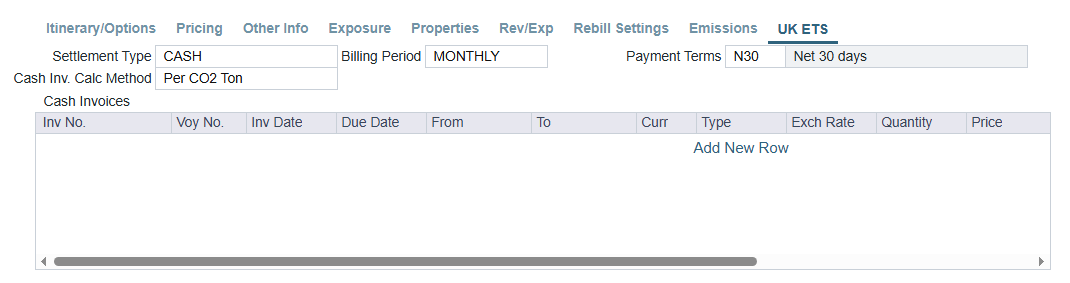
UK ETS expense allocation to a contract requires the configuration flag CFGEnableUKETSAllocation to be enabled and schema version 54.0. The UK ETS tab requires CFGEnableTCEmissionsAllocation for TC contracts and CFGEnableCargoEmissionsAllocation for Cargo and VC In contracts.
You can select the Cash settlement type on the UK ETS tab of a Cargo, VC In, Time Charter, or Head Fixture contract added to the Estimate or Voyage Manager. This setting allocates UK ETS expenses to a specific contract and enables cash invoices for voyages linked to that contract.
Business Rules Setup for UK ETS
See the Carbon Emissions Business Rules page for the specific Business Rules setup requirements for UK ETS financial workflows.
Fuel Type Setup for UK ETS
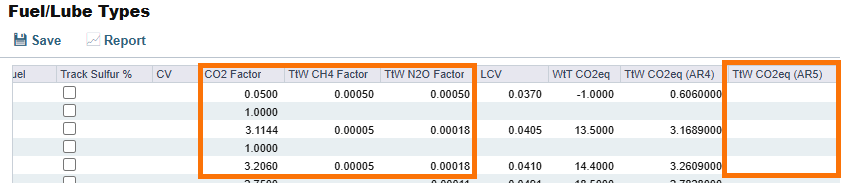
On the Fuel/Lube Types form, add TtW Co2eq (AR5) values for each fuel type.
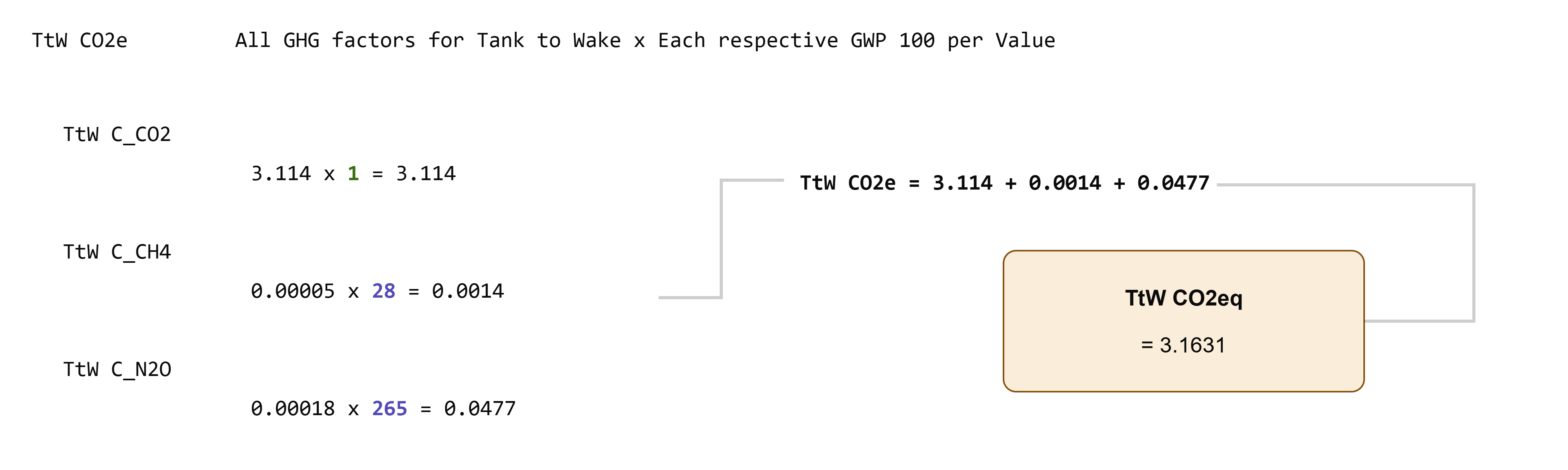
You can calculate AR5 values by multiplying the carbon dioxide (CO₂) factor, methane (CH₄) factor, and nitrous oxide (N₂O) factor fields by the AR5 assessment value for each fuel type.
Key factor fields in Fuel/Lube Types screen:
Example R5 calculation:
IPCC AR5 global warming potential values: CH₄ = 28, N₂O = 265, C0₂ = 1.
-
For clients without AR5 values, the system has a fallback method, and will use AR4 values. If AR4 values are missing, the system uses CO2 factors for calculations (AR5 → AR4 → CO2 factor)
-
TtW Co2eq (AR5) fields are also available in the Bunker Grades screen and bunker lifting level emissions.
Coming Soon: Allowance invoicing capabilities, UKA future trades and UK allowances, allowance transfer capabilities, UK allowance trading and inventory management, EEX integrations extended to UKA futures, and additional configuration flag options similar to EU ETS.